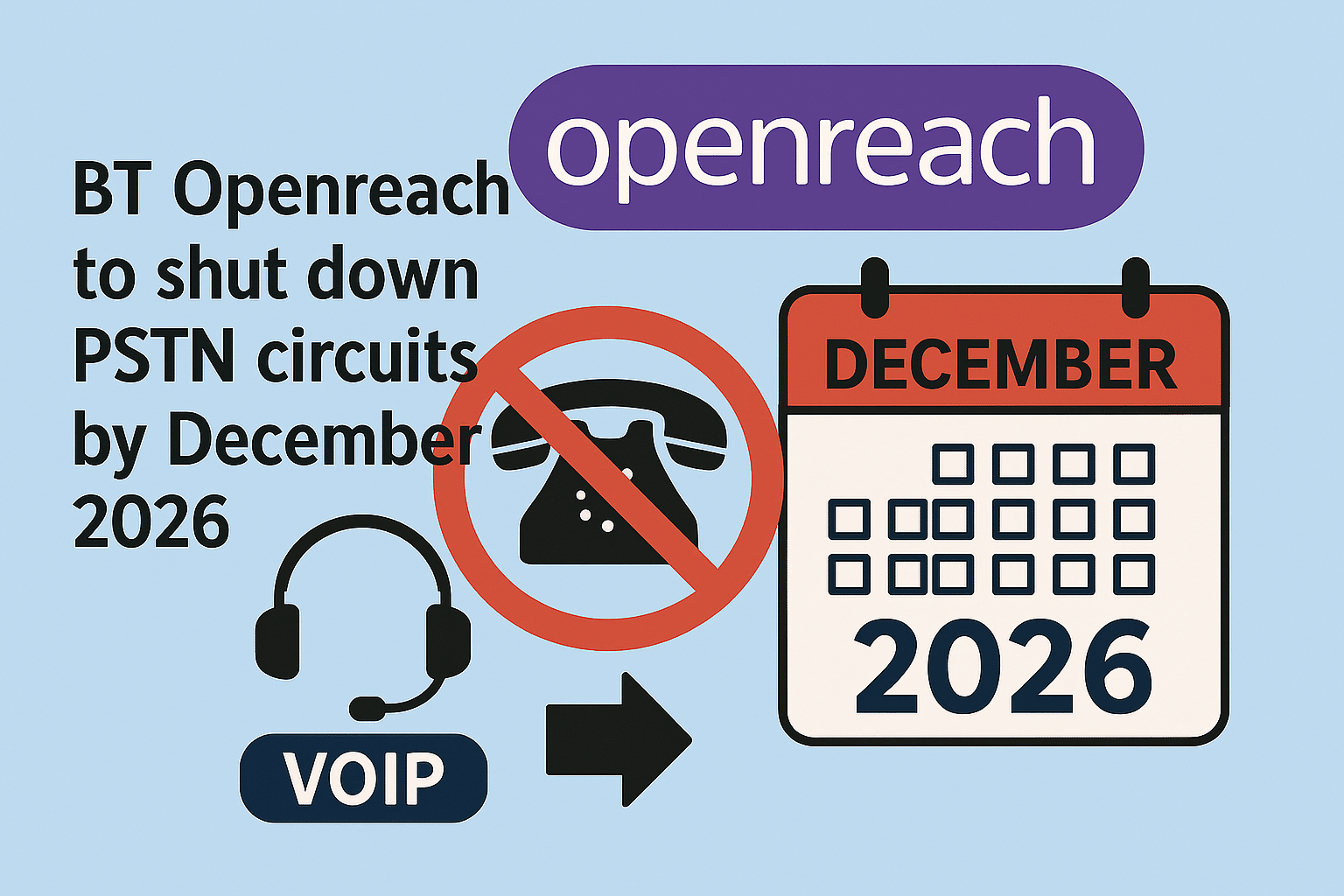
BT Openreach announced the end of PSTN and ISDN back in 2015. The telecommunications service provider began shutting down networks in 2020 and will stop taking new orders starting 2023. By December 2026, PSTN circuits will be shut off completely.
Before we dive into the details of the PSTN switch off, here’s a summary of the terms we’ll be using to help you understand the situation better:
Know your jargons
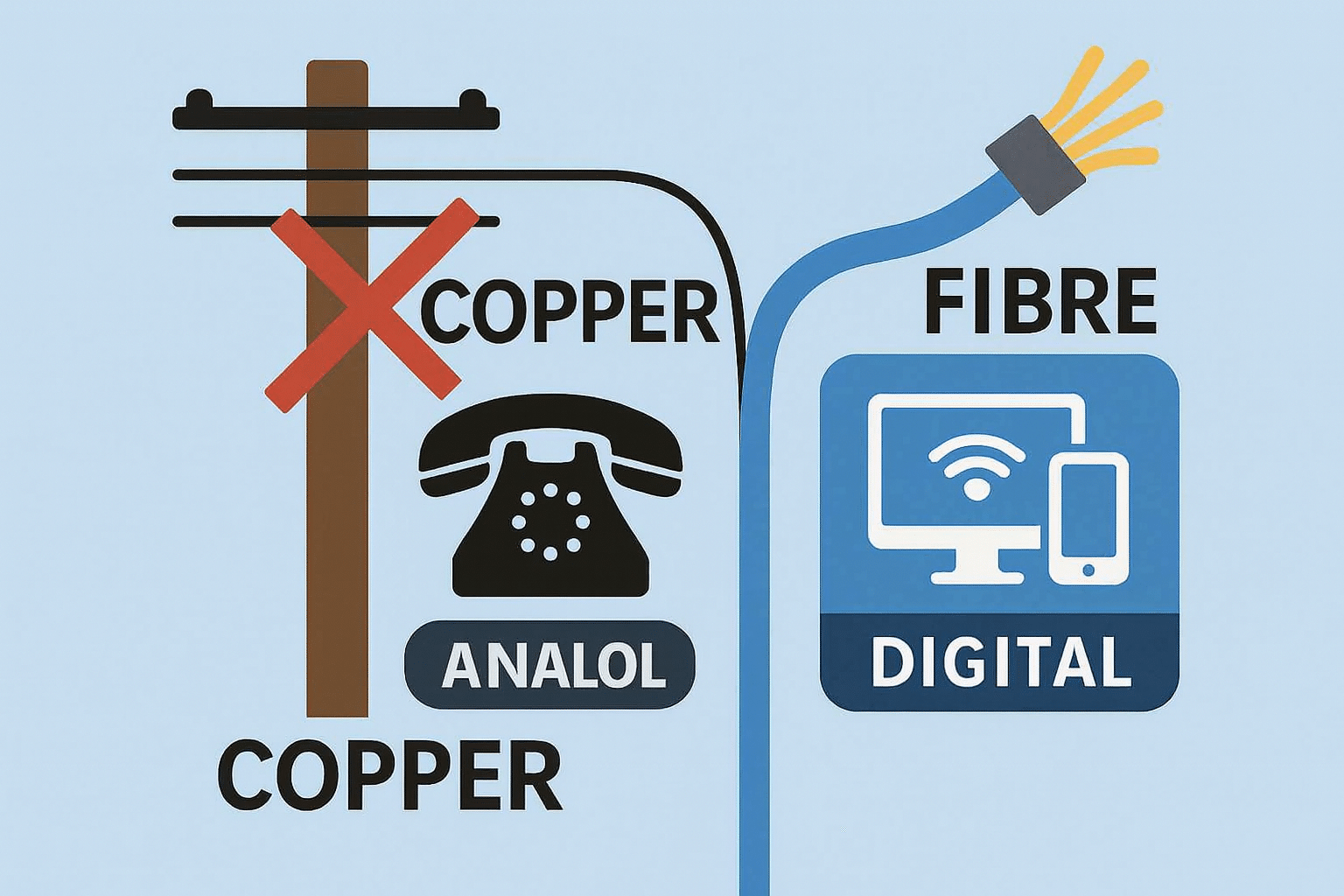
PSTN – stands for Public Switched Telephone Network, the old circuit-switched network that powers traditional telephone lines and cables.
ISDN – stands for Integrated Services Digital Network. It’s a circuit-switched telephone network just like PSTN. The difference is that ISDN transmits voice and data via digital instead of analogue lines. It also provides better voice quality.
Traditional Telephony – A traditional or legacy telephony system runs on premise-based physical boxes connected by wires. Both PSTN and ISDN systems are considered traditional because they still rely on cables.
VoIP or Cloud Telephony – Cloud business phone systems, or VoIP, route calls through the internet, eliminating the need for telephone boxes and cables and other on-premises hardware.
What’s happening in the PSTN switch off?
BT Openreach will be switching off all PSTN services, both for businesses and homes. The phaseout will include ISDN networks since these also run on traditional telephone lines.
Everything else that uses your old phone network will be affected by the switch-off. This includes door entry systems, CCTVs, fax machines, PSTN alarm systems and even electronic point-of-sale (EPOS) machines. Manufacturers are already working on solutions to replace these products so you can retain the same functions post-switch off.
Why is Openreach doing this?
BT Openreach acknowledges that the nature of telecommunications has changed drastically in the past decade. ISDN networks can no longer support the speed, scalability and method of communications that businesses need today.
With that, Openreach has decided to stop investing any more money and labour into a technology that can’t fulfil the needs of the modern business landscape. Additionally, the firm will cease its PSTN services to make companies migrate to telecommunications solutions that enable them to grow at the pace they want.
BT Openreach is actively endorsing all-digital communications as replacements for legacy telephone systems. These solutions include cloud telephony, hosted PBX and other internet-based communication systems.
What does the switch off mean for your business?
About 2.4 million businesses in the UK still operate on PSTN or ISDN, most of which are small and medium enterprises. Some larger organisations have also yet to make the switch. Roughly 33 per cent of large corporations still rely on analogue for a portion of their communications processes.
If you’re one of the businesses still using landline telephones and fax machines, the switch off will dramatically impact your operations. You’ll need to figure out how this situation will change how your staff communicates with clients, customers, partners and vendors and how you’ll cope with that change.
You may be thinking, ‘The switch-off is years away. Why do I have to worry about it now?’ You need to start planning your strategy for the switch off as early as now because there are many factors to consider. Will you need to get rid of your telephones and purchase new equipment? Is your internet connection fast enough to support cloud telephony?
Ultimately, you shouldn’t wait until 2026 to migrate your phone networks. We’ve detailed everything you need to learn digital communication systems to help you prepare for your VoIP switch.